



Global mining capital expenditure is on track to exceed $120 billion in 2026, driven by surging demand for copper, lithium, and rare earth elements powering the energy transition. Caterpillar, Komatsu, and Sandvik equipment running at bearing temperatures of 200–400°C demands EP grease that does not fail. For lubricant formulators supplying this sector, the choice between MoS2 and WS2 as solid lubricant additives has direct consequences for equipment life, service intervals, and liability.
Where MoS2 Reaches Its Limit
Molybdenum disulfide (MoS2) begins oxidizing at 350°C in air, converting to molybdenum trioxide (MoO3) — a hard, abrasive oxide that accelerates wear rather than preventing it. Above 400°C, decomposition accelerates and SO2 is released. For mining equipment operating in hot, dusty environments with limited relubrication access, this is a formulation liability.
WS2 Advantages: Higher Ceiling, Lower Dose, Better Oxidation Resistance
Tungsten disulfide (WS2) oxidation onset in air is above 425°C, a 75-degree advantage over MoS2. Torvix W720 from Powderful Solutions reaches an 800 kgf weld point per ASTM D2596 at just 2.5% loading, versus 10% typically required for standard MoS2 — a 4x dose reduction.
ASTM D2596 Head-to-Head: Weld Point Data
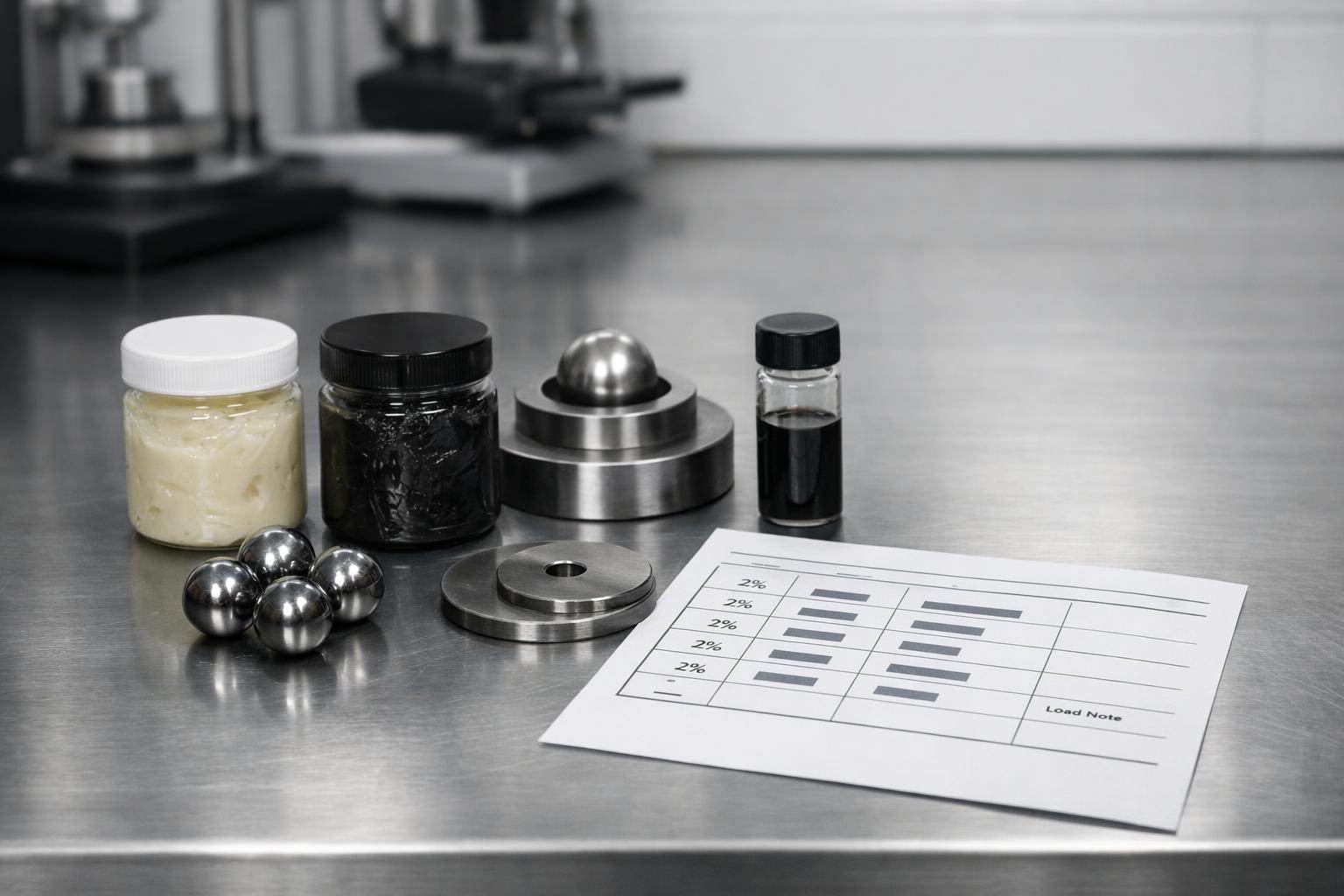
- Standard MoS2 at 10%: weld point 800 kgf, LNSL 400 kgf
- Torvix W720 (WS2) at 2.5%: weld point 800 kgf, LNSL 500 kgf
- hBN at 2%: weld point 630 kgf — better suited for oxidative or food-grade environments

Mining Equipment Field Results
A documented case study on Cummins KTA diesel engines in open-cut mining using a WS2 dispersion from Powderful Solutions recorded 28.8% more engine hours between overhauls, doubled oil drain intervals, and 5.85% reduced fuel consumption.
When to Choose MoS2, When to Choose WS2
Choose WS2 when operating temperature exceeds 300°C, oxidative stability is required, or treat rate economics matter at scale. For food-grade applications, Desilube’s NSF HX1-eligible hBN dispersions are the correct path.
Request a comparison sample pack at powderfulsolutions.com.